Screams From the Margins: How Micro-Budget Horror Creators Are Rewriting the Rules of Fear
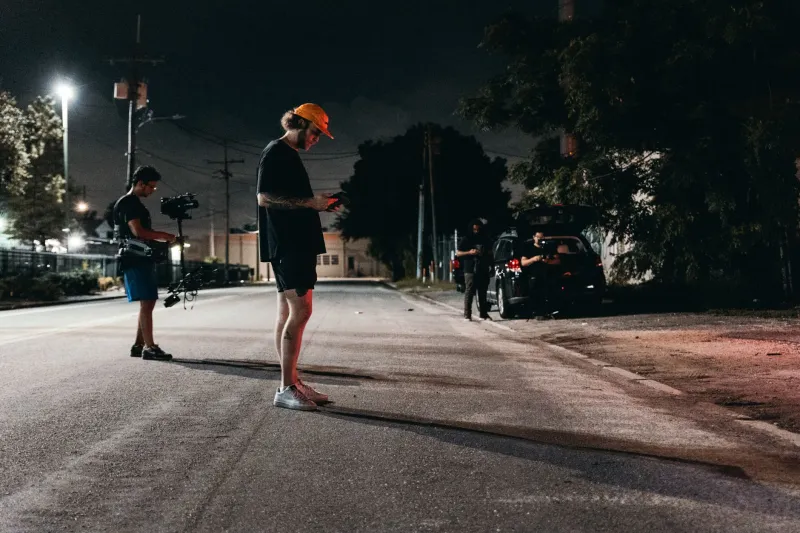
For most of cinema's history, the horror genre has operated on a straightforward economic logic: a studio invests capital, hires established talent, secures wide theatrical distribution, and recoups its investment through opening-weekend box office performance. That logic, however durable it once seemed, is being quietly dismantled — not by competing studios or streaming giants, but by individual filmmakers working with budgets that would not cover a single day of catering on a major production.
Across TikTok, YouTube, and Instagram, a loose but growing community of micro-budget horror creators is demonstrating that the capacity to frighten, disturb, and emotionally move an audience has never been a function of financial resources. It is, and perhaps always was, a function of craft, timing, and a genuine understanding of what unsettles the human mind.
The New Economics of Fear
The numbers that define micro-budget horror are striking in their modesty. Projects in this space frequently come together for anywhere between a few hundred and a few thousand dollars — figures that, by Hollywood standards, barely register as a rounding error. Yet some of these productions have accumulated viewership figures that rival the opening-weekend audiences of mid-tier studio releases.
What has changed is not human psychology, but the infrastructure surrounding it. The cost of capable camera equipment has collapsed dramatically over the past decade. Editing software that once required expensive licensing agreements is now available through subscription models accessible to working-class creators. Sound design tools, color grading applications, and visual effects plugins have followed a similar trajectory. The technological barriers that once enforced a clear separation between professional and amateur filmmaking have, in meaningful ways, dissolved.
TikTok's short-form format has proven particularly hospitable to horror content. The platform's algorithm rewards engagement metrics — shares, comments, replays — and horror, almost by structural definition, generates all three. A well-executed jump scare in a fifteen-second clip can accumulate millions of views within hours, introducing a creator's work to audiences that no traditional marketing budget could have efficiently reached.
Case Studies in Grassroots Terror
Among the most instructive examples of this phenomenon is the work emerging from creators who treat their social media presence not as a promotional tool for finished films, but as the primary medium of storytelling itself. Serialized horror narratives, delivered in episodic installments across platforms, have cultivated dedicated audiences who engage with the work in ways that theatrical distribution simply cannot replicate — commenting theories, sharing clips with personal annotations, and participating in the unfolding of the story in real time.
One particularly notable approach involves what practitioners in the space have termed "found footage 2.0" — horror content engineered to appear as though it originated organically within the social media ecosystem itself. Unlike the found footage films of the late 1990s and early 2000s, which simulated the aesthetic of consumer video cameras, this newer form mimics the visual language of phone recordings, livestreams, and surveillance footage. The familiarity of that visual grammar makes the horror more immediate and more intimate.
Creators working in this mode have demonstrated a sophisticated understanding of platform-specific audience behavior. They know, for instance, that TikTok viewers are more likely to engage with content that rewards multiple viewings — hidden details in the background of a frame, audio anomalies that only become apparent on second listen. This approach transforms the audience from passive consumer into active investigator, deepening engagement in ways that a single theatrical screening cannot.
Distribution Without a Distributor
Perhaps the most significant disruption these creators represent is not aesthetic but logistical. Independent filmmakers have historically faced a brutal reality: producing the work is difficult, but distributing it is often more difficult still. The gatekeeping function of traditional distributors has kept countless worthy projects from reaching meaningful audiences.
Micro-budget horror creators have, in effect, solved this problem by collapsing the distinction between production and distribution. The platform is the theater. The algorithm is the booking agent. A creator who builds an audience of several hundred thousand followers on TikTok possesses something that independent filmmakers of previous generations could only dream of: a direct, unmediated relationship with the people who want to watch their work.
This dynamic has also enabled novel monetization strategies. Patreon memberships, merchandise tied to fictional universes, and licensing arrangements for viral clips have allowed some creators to generate sustainable income from their work without ever seeking theatrical distribution or entering into agreements with streaming platforms. The financial model remains precarious for most, but its very existence represents a meaningful expansion of the possible.
What the Studios Are Watching
It would be a mistake to characterize the major studios as indifferent to what is happening at the margins of the horror genre. Several production companies with studio affiliations have made deliberate efforts to identify and acquire micro-budget horror projects that have demonstrated viral traction — a strategy that mirrors, in some respects, the music industry's long practice of signing artists who had already built independent audiences.
The tension in this dynamic is worth noting. The qualities that make micro-budget horror effective — its rawness, its intimacy, its apparent authenticity — are precisely the qualities that large-scale production processes tend to sand away. Creators who have accepted studio partnerships have reported, with varying degrees of candor, that the transition involves significant creative negotiation. The question of whether the studio system can metabolize the energy of grassroots horror without neutralizing it remains genuinely open.
What is less ambiguous is that the studios are absorbing lessons about audience engagement, content pacing, and platform-native storytelling that are already influencing how larger productions are marketed, if not always how they are made.
The Democratization and Its Limits
It is tempting to narrate this moment as an uncomplicated triumph of democratization — the tools of cinema finally in the hands of everyone, the gatekeepers finally circumvented. That narrative contains real truth, but it benefits from some qualification.
The creators who have achieved significant traction in micro-budget horror are not a random sample of aspiring filmmakers. They tend to be individuals with existing fluency in social media mechanics, a strong intuitive sense of platform-specific audience behavior, and the time and stability to produce content consistently over extended periods. These are not trivial advantages, and they are not evenly distributed.
Furthermore, the algorithmic systems that have enabled this movement are themselves subject to change. Platform policy shifts, changes to content moderation standards, and alterations to recommendation algorithms can significantly disrupt the distribution strategies that micro-budget creators depend upon. The independence these filmmakers enjoy is real, but it is not unconditional.
A Genre Transformed From Below
None of these qualifications diminish the genuine significance of what is occurring. Horror, a genre that has historically served as a testing ground for formal experimentation and cultural provocation, is once again being reshaped by practitioners working outside the established system. The filmmakers driving this transformation are not waiting for permission, for funding, or for industry validation. They are making work, finding audiences, and in doing so, expanding the boundaries of what the genre can be and who gets to make it.
For those who believe that cinema's most vital energies have always originated outside the studio gates, what is happening in micro-budget horror right now is not a curiosity. It is a confirmation.