Printed, Patched, and Rigged: The Independent Filmmakers Reinventing Their Own Toolkits

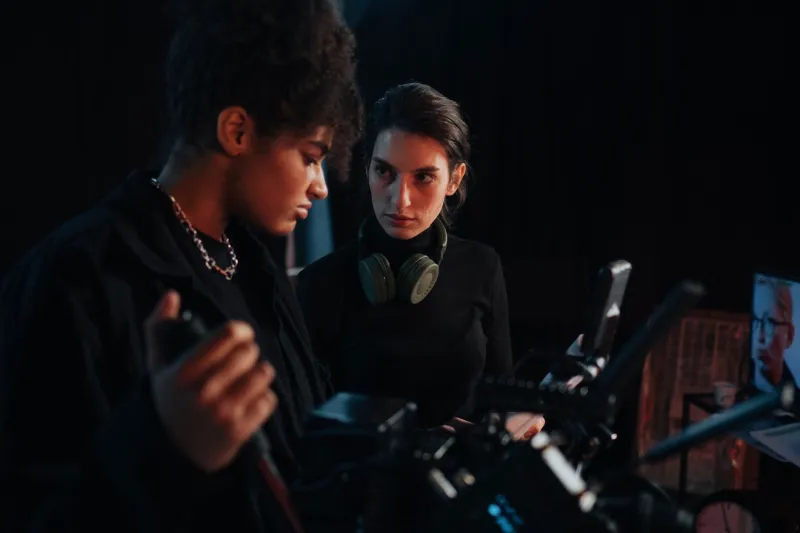
Photo: DIY filmmaker 3D printed camera rig workshop equipment, via lorabloomquist.com
There is a particular kind of satisfaction that comes from building something yourself—especially when that something saves you several thousand dollars. For a rising number of independent filmmakers operating well outside the studio system, that satisfaction is not merely personal. It is professional, practical, and increasingly central to how they approach the craft of making films.
Across the United States, creators are fabricating camera stabilizers, rigging systems, lens adapters, and lighting solutions from materials that would not look out of place at a hardware store or a community makerspace. The results, in many cases, are indistinguishable from commercially manufactured equipment on screen. The movement has a name in some circles—DIY filmmaking infrastructure—and it is quietly reshaping what it means to work outside the gates of the traditional production industry.
The Cost Problem That Never Goes Away
For independent filmmakers, equipment cost is rarely a one-time obstacle. Even when a creator manages to acquire a capable camera body, the ancillary gear required to produce professional-looking footage—stabilization rigs, follow-focus systems, matte boxes, motorized sliders, and quality lenses—can multiply the initial investment several times over. Rental fees, while sometimes more accessible, accumulate quickly across a production schedule and represent money that never returns to the project.
This economic reality has long pushed resourceful filmmakers toward improvisation. What has changed in recent years is the sophistication of the tools available to support that improvisation. Consumer-grade 3D printers capable of producing durable, precision-fitted components now retail for under $300. Open-source hardware platforms allow creators to build motorized camera systems with modest electronics knowledge. Online communities share tested designs and modification guides freely, collapsing the learning curve that once made such projects the exclusive domain of engineers.
The outside industry filmmaker, operating without a studio equipment budget or a corporate rental account, has become the primary beneficiary of this convergence.
From Makerspace to Film Set
In cities like Portland, Denver, and Columbus, local makerspaces have quietly become informal production hubs. Filmmakers share 3D printer time to fabricate custom lens hoods, cold shoe mounts, and articulating monitor arms. Some have produced entire shoulder rig systems from printed components and off-the-shelf aluminum extrusion, achieving the ergonomic balance of commercial rigs costing upward of $800 for a fraction of that figure.
Lens modification represents another frontier. A community of creators has developed repeatable processes for adapting vintage glass—manual focus lenses produced decades ago for film cameras—to modern mirrorless bodies. These lenses, available for modest sums at estate sales and on secondhand marketplaces, can produce optical characteristics that contemporary cinema lenses charge premium prices to replicate. With the right adapter ring, often itself fabricated or sourced for under $20, a filmmaker gains access to a rendering quality that carries genuine aesthetic distinction.
Smartphone-based filmmaking has similarly attracted serious engineering attention. Anamorphic lens attachments, originally sold as novelty accessories, have been refined by independent creators into genuinely usable cinematic tools. Clip-on diffusion filters, custom-built in small batches and shared within online communities, allow smartphone cameras to approximate the look of far more expensive imaging systems. The gap between consumer and professional imagery, in other words, is increasingly a matter of knowledge rather than capital.
The Community That Makes It Possible
No single innovation defines this movement as clearly as the communities that sustain it. Forums, Discord servers, and YouTube channels dedicated to DIY filmmaking infrastructure have accumulated audiences in the tens of thousands. Creators share not only designs but failure reports—documenting which approaches did not hold up under production conditions and why. This culture of open documentation accelerates collective progress in ways that proprietary commercial development rarely matches.
The ethos here is explicitly collaborative. Designers who produce a successful 3D-printed rig component will often release the file to the community without charge, asking only for attribution or a report on how the design performs in the field. The result is a living archive of practical solutions, continuously tested and refined by people who are actually using the gear to make films.
This collaborative infrastructure also has a mentorship dimension. Experienced DIY builders frequently guide newer creators through their first fabrication projects, either through detailed online tutorials or direct correspondence. The knowledge transfer that occurs in these exchanges mirrors the informal apprenticeship traditions of traditional crafts, transposed into the context of independent film production.
What the Studios Are Not Watching
It would be easy to frame this phenomenon as merely a practical workaround—a stopgap for filmmakers who cannot yet afford the real thing. That framing misses the more significant implication. For many of the creators involved, DIY gear culture is not a transitional phase but a permanent orientation. The process of building and modifying equipment fosters an intimate technical understanding of how imaging systems work, which in turn informs more deliberate creative decisions on set.
Filmmakers who have built their own stabilization rigs, for instance, tend to develop a nuanced sense of how weight distribution affects movement quality. Those who have modified lenses understand the optical trade-offs between sharpness, aberration, and bokeh character in ways that simply renting a lens rarely teaches. The DIY approach, in this sense, is not just economically advantageous. It is pedagogically generative.
For the outside industry as a whole, the implications are significant. As the barrier between professional and amateur equipment continues to erode—driven not by corporate product development but by the ingenuity of independent creators—the conditions for genuine democratization of filmmaking quality come closer to being met. The studio system has never had a meaningful stake in making professional production accessible. The people building their own gear in garages and makerspaces across America are making it accessible anyway.