Shooting on a Shoestring: How Secondhand Cameras and Free Software Are Rewriting the Rules of Professional Production
For decades, the barrier separating independent cinema from studio-caliber production was, in large part, a financial one. The cameras were prohibitively expensive. The editing suites required licensing fees that rivaled small business loans. The color grading tools, the audio post-production software, the visual effects pipelines — each represented another toll booth on a road that most aspiring filmmakers simply could not afford to travel.
That road is being quietly dismantled.
Across the United States, a growing cohort of outside-industry creators is assembling surprisingly capable production setups by sourcing used professional equipment and relying on free or low-cost software alternatives. The work emerging from these pipelines is, in many cases, indistinguishable from content produced with budgets many times larger. What was once a question of capital has become, increasingly, a question of knowledge and resourcefulness.
The Secondhand Market as Creative Infrastructure
The professional camera market has undergone a quiet but consequential transformation over the past decade. As manufacturers release successive generations of cinema cameras at accelerating intervals, previous models — many of which remain technically formidable — cascade into the secondhand market at dramatically reduced prices.
A camera body that commanded $6,000 at launch may circulate on platforms such as eBay, B&H Photo's used department, or the dedicated forums at DVXuser and REDUser for a fraction of that figure just three or four years later. Filmmakers who have built careers outside the studio system describe this dynamic as transformative.
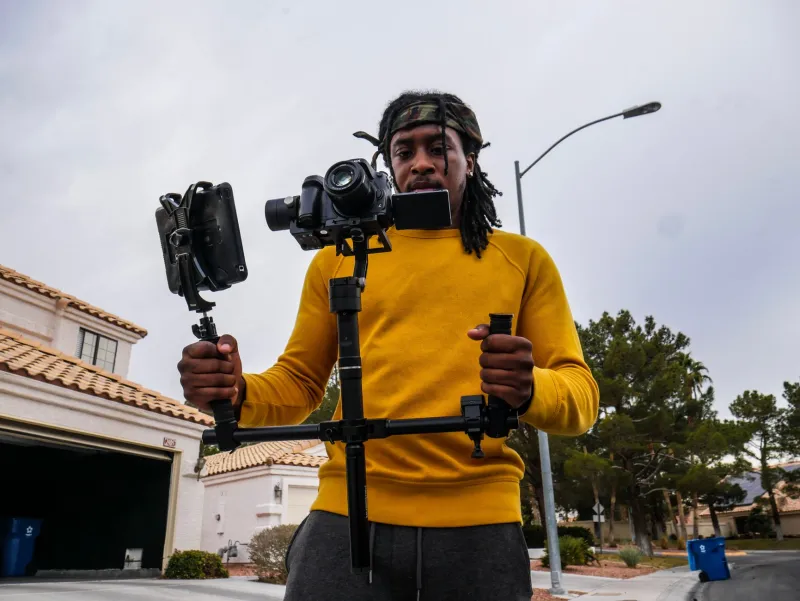
Marcus Trevino, a narrative filmmaker based in Austin, Texas, assembled his entire camera package — a used Sony FS7 with a set of vintage Contax Zeiss lenses sourced from a retiring cinematographer in Los Angeles — for under $4,000. His short film The Meridian Line, shot on that package, earned a slot at a regional festival circuit and attracted the attention of a streaming platform specializing in documentary-adjacent fiction. "The camera didn't know it was bought secondhand," Trevino noted during a conversation about his production approach. "It still captured the same image it always did."
Beyond camera bodies, the secondhand ecosystem extends to lighting, audio equipment, and grip hardware. LED panels, wireless audio systems, and cinema-grade tripods that once required rental budgets now change hands among working independent filmmakers who treat the secondary market as a legitimate procurement channel rather than a fallback option.
Open-Source and Free-Tier Software: Closing the Post-Production Gap
If the hardware side of the equation has been addressed by the secondhand market, the software side has been transformed by the open-source movement and the strategic pricing decisions of companies competing aggressively for the independent sector.
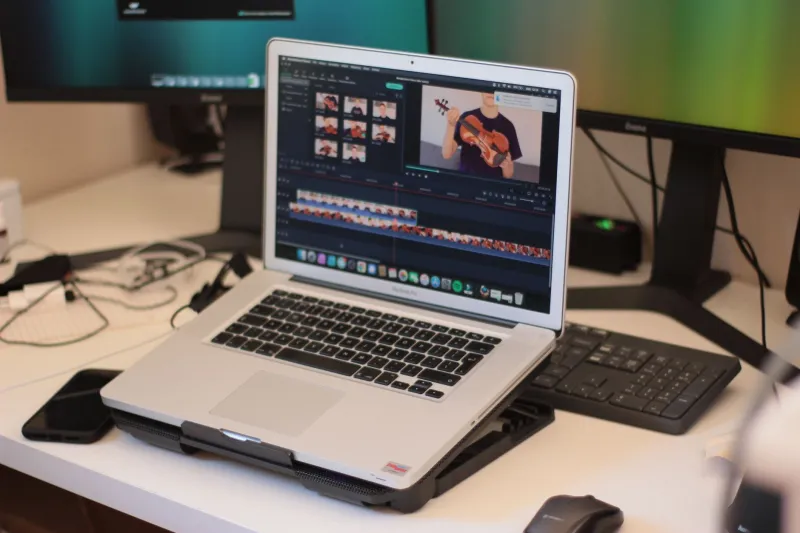
DaVinci Resolve, developed by Blackmagic Design, stands as perhaps the most significant example of this shift. What began as a professional color grading application used on major studio productions is now available in a fully featured free version that includes editing, audio post, visual effects compositing, and color correction tools. Independent filmmakers who previously relied on subscription-based software or pirated alternatives now have access to a legitimate, industry-standard application at no cost.
Blender, the open-source 3D creation suite, has similarly upended assumptions about what is achievable outside of well-funded visual effects pipelines. Films requiring digital set extensions, creature work, or motion graphics that once demanded outsourcing to specialized facilities are increasingly handled in-house by filmmakers who have invested time rather than money in learning the platform.
Audacity, the free, open-source audio editor, remains a staple of low-budget production pipelines for dialogue cleanup and sound design. Paired with free impulse response libraries for realistic reverb and the growing catalog of royalty-free music on platforms such as Free Music Archive, it is possible to assemble a complete audio post workflow without a single paid license.
"The software gap closed faster than most people realize," said Diana Chu, a documentary filmmaker based in Portland, Oregon, whose work examines labor conditions in the Pacific Northwest. Chu built her entire post-production workflow around Resolve and Audacity after completing a feature-length documentary on a budget that she describes as "aggressively modest." The film was acquired by a regional streaming service and has since been licensed for educational distribution. "I spent more on hard drives than I did on software," she said.
Communities as Curriculum
The democratization of tools is only part of the story. Equally significant is the parallel democratization of knowledge, which has occurred through online communities that function, in practical terms, as informal film schools.
Forums such as DVXuser, Reddit communities including r/Filmmakers and r/videography, and the comment sections of YouTube channels dedicated to independent production have created environments where working professionals and emerging creators exchange technical knowledge at a granular level. Specific questions about color science, audio signal chains, lens characteristics, and post-production workflows receive detailed responses from practitioners who have navigated the same challenges.
This communal knowledge infrastructure has compressed the learning curve for filmmakers who lack access to formal education or industry mentorship. A filmmaker in rural Montana can now access the same technical guidance that was once available only to those enrolled in accredited programs or employed by production companies with institutional knowledge.
The Aesthetic Dividend
One underexamined consequence of this shift is its effect on the aesthetic texture of independent cinema. Because outside-industry filmmakers are not constrained by the equipment preferences of studio productions — which often default to the most current, most expensive tools as a matter of institutional habit — they frequently arrive at distinctive visual signatures by necessity.
Vintage glass, unconventional camera formats, and the particular rendering characteristics of older sensor technology have become markers of an aesthetic sensibility that some audiences actively seek out. The limitations of a budget, channeled through ingenuity, can produce work that feels genuinely distinct from the polished uniformity of mainstream production.
This is not a new observation in the history of cinema — constraint has always been a generative force. What is new is the degree to which those constraints have been reduced to a level that makes professional-grade work achievable for a far larger number of practitioners than at any previous moment.
A Shifting Landscape
The implications for the broader film industry are still unfolding. As more outside-industry creators demonstrate that broadcast-quality work can be produced without significant capital investment, the traditional gatekeeping function of production infrastructure is eroding. The gates, it turns out, were never as firmly shut as they appeared — they were simply expensive to open.
For cinephiles and industry observers, the work emerging from these shoestring pipelines represents something worth paying close attention to. Not because it is produced cheaply, but because it is produced freely — free from the financial dependencies that have historically shaped what stories get told and how they get told.
The equipment rebellion, as some in the independent community have taken to calling it, is less a revolt against quality than a reclamation of it.