Wrenches and Raw Footage: The Underground Engineers Rebuilding Cinema From Salvaged Parts
The Workshop as Creative Space
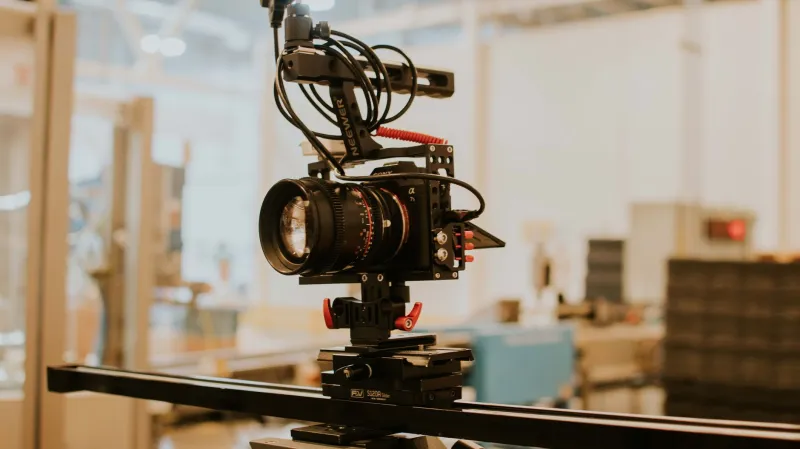
In a converted garage on the outskirts of Albuquerque, filmmaker Marcus Delray keeps a workbench that looks less like a cinematographer's prep station and more like a mechanical engineer's laboratory. Coils of stripped wire sit beside salvaged lens mounts. A broken Arri follow-focus unit, sourced from a production liquidation sale for eleven dollars, has been gutted and reassembled with 3D-printed components. Beside it rests a shoulder rig constructed almost entirely from aluminum conduit and skateboard hardware.
Delray is not an outlier. He is, increasingly, a representative figure within a broader movement of independent filmmakers who have come to regard the equipment itself as a creative problem to be solved—not merely a tool to be rented.
"The rental house model assumes you have a credit card and a production company behind you," Delray explains. "When neither of those things is true, you either stop making films or you start figuring things out yourself. I chose the second option."
This ethos—part necessity, part philosophy—is generating a distinct technical culture within outside industry filmmaking, one defined by improvisation, mechanical literacy, and a willingness to treat professional-grade equipment as raw material rather than finished product.
The Anatomy of a Frankensteined Rig
Understanding what these filmmakers are actually building requires a brief detour into production equipment economics. A new professional cinema camera rig, configured for documentary or narrative work, can easily exceed thirty thousand dollars. Even modest configurations involving a reliable mirrorless body, a proper matte box, a follow-focus system, and a functional shoulder mount routinely run several thousand dollars at retail.
The salvage market tells a different story. Production companies frequently liquidate aging equipment when they upgrade. Rental houses retire gear that no longer meets their standards but remains entirely functional. Online auction platforms, estate sales, and regional film equipment swaps have created a secondary market where the gap between professional capability and consumer pricing narrows considerably.
Filmmaker Yolanda Ferris, based in rural Ohio, has built what she describes as a "working professional kit" for under eight hundred dollars by purchasing components from three separate liquidation sales and one estate auction. Her camera cage began life attached to a Sony FS7 at a now-defunct commercial production house in Columbus. The matte box came from a Midwest rental company's clearance lot. The lens she shoots most frequently—a vintage Nikon prime she adapted with a machined mount—cost forty dollars at an estate sale.
"None of it matches," she says with some amusement. "But it all works. And when something breaks, I fix it myself, because I understand how every piece of it was put together."
That last point is significant. The act of assembly creates a form of technical knowledge that conventional equipment ownership rarely demands. Filmmakers who build their own rigs develop an intimate understanding of how each component functions and fails—a literacy that pays dividends when something goes wrong on a remote location with no rental house within driving distance.
Optics, Hacks, and the Lens Modification Underground
Perhaps the most technically sophisticated corner of this DIY engineering movement involves lens modification. Vintage glass—manual-focus lenses manufactured decades ago for still photography—has become a primary resource for independent cinematographers seeking a distinctive optical character without the cost of dedicated cinema lenses.
Adapting a vintage still lens to a modern cinema camera body is relatively straightforward; machined or printed mount adapters handle the physical connection. But some filmmakers have pushed considerably further, performing internal modifications that alter the optical properties of the lens itself.
In Portland, Oregon, filmmaker and self-taught optical tinkerer Soren Blanchard has developed a small reputation within regional filmmaking circles for his lens "de-clicking" and aperture blade modifications. De-clicking removes the tactile detents from an aperture ring, allowing smooth, continuous aperture pulls during a shot—a feature standard on cinema lenses but absent from most still glass. Aperture blade modifications can alter the bokeh character of a lens, changing the shape and quality of out-of-focus elements in the image.
"None of this is new," Blanchard is careful to note. "Camera technicians have been doing lens work for decades. What's changed is access to information. There are forums, video tutorials, and communities online where people share exactly how to do these modifications safely. The knowledge that used to live only inside professional camera houses is now broadly available."
Blanchard performs modifications for other filmmakers in the region on a sliding-scale basis, functioning as an informal technical resource for a loose network of independent producers who collectively share equipment, skills, and information.
Lighting Systems and the Art of Reverse Engineering
Beyond camera systems, independent filmmakers are applying similar ingenuity to lighting—historically one of the most expensive categories in any production budget. Commercial LED panel fixtures from established manufacturers carry significant price premiums, but the underlying technology is increasingly accessible to those willing to source components directly.
Several filmmakers interviewed for this piece described building functional LED panels using strips purchased from wholesale electronics suppliers, diffusion materials sourced from theatrical supply companies, and dimmer circuits assembled from publicly available schematics. The resulting fixtures lack the polish of commercial units but deliver comparable light output at a fraction of the cost.
The DIY lighting community has also found creative applications for equipment originally designed for entirely different purposes. Grow lights used in indoor horticulture, automotive LED conversion kits, and even repurposed commercial signage have all found their way into independent film productions. The challenge, filmmakers note, is color accuracy—ensuring that improvised light sources render skin tones faithfully on camera requires careful measurement and testing, but it is a solvable problem for anyone with a basic color meter and patience.
Limitation as a Design Constraint
There is a broader creative argument embedded in all of this technical improvisation, one that extends beyond budget necessity into aesthetic philosophy. Several filmmakers described their equipment constraints not as obstacles to be overcome but as parameters that actively shape their visual approach.
"When you can't afford a camera crane, you find other ways to create vertical movement," says Ferris. "Sometimes those solutions are more interesting than the crane would have been. The limitation forces a decision that turns out to be the right one."
This perspective aligns with a tradition of resourceful filmmaking that stretches from the French New Wave through American independent cinema of the 1990s—a tradition in which the absence of resources has repeatedly proved generative rather than merely inconvenient. What distinguishes the current moment is the degree to which technical knowledge, component availability, and community infrastructure have made genuine DIY engineering accessible to filmmakers operating outside any institutional support structure.
The garage workshop in Albuquerque, the estate-sale lens in Ohio, the hand-soldered LED panel—these are not symptoms of a filmmaking culture in distress. They are evidence of one in active, inventive motion.